Sponsored by

Good morning. Today is Friday, August 28th!
🥳 Congratulations on starting today with God, and thank you for letting us be a part of it.

📖 Verse Of The Day

— 1 Samuel 1:13

❤️ Today’s Sponsor
10K Steps Is a Myth–Try This Instead

When motivation is lacking, jumping into heavy routines is the fastest way to burn out. That’s why millions of people are turning to walking as the foundation of their fitness journey.
Walking lets you enjoy the outdoors, clear your head, and practice mindfulness. It’s simple, sustainable, and can support lasting weight loss if you know how much you need. The “10,000 steps a day” rule is outdated; everyone’s lifestyle is different.
With Simple, you’ll get access to habit-based coaching that’s helped users lose over 18 million pounds. Take the quiz to discover your personalized walking target.

🧠 Devotional
Have you ever wondered why we do certain things when we pray?
Why do we bow our heads? Why close our eyes? Why fold our hands? Why do some people kneel, raise their hands, take off their hat, or pray out loud?
A lot of it comes from a combination of biblical examples, following the way Jesus prayed, showing reverence, and simple practicality. But interestingly, the Bible never gives us one required position for prayer.
Take bowing or kneeling. Both naturally show humility and submission, and we actually see them in Scripture. Daniel “got down on his knees and prayed” three times a day (Daniel 6:10). Jesus went even lower in Gethsemane: “He fell with his face to the ground and prayed” (Matthew 26:39).
So when Christians kneel to pray, we’re doing something God’s people have done for thousands of years, and something Jesus Himself did.
But Jesus didn’t always pray that way.
Sometimes He looked up. Before raising Lazarus, “Jesus looked up and said, ‘Father…’” (John 11:41). Standing was normal too. Jesus even says, “when you stand praying” (Mark 11:25).
Our hands have a history too. We usually fold them, which became a traditional posture of reverence and also keeps our hands still. But the Bible often shows people raising or spreading their hands. Solomon knelt and “spread out his hands toward heaven” (2 Chronicles 6:13), and 1 Timothy 2:8 mentions “lifting up holy hands” in prayer.
Closing our eyes isn’t commanded anywhere. It simply helps remove distractions and focus. Taking off a hat is mostly a cultural sign of respect, although 1 Corinthians 11 does discuss men praying with their heads covered in its own cultural and worship context.
Even speaking isn’t required. Hannah prayed while “her lips were moving but her voice was not heard” (1 Samuel 1:13). God heard her anyway.
So our prayer posture today didn’t come out of nowhere. Some of it comes directly from postures shown in Scripture and by Jesus Himself. Some developed because Christians wanted to show humility and reverence. And some, like closing our eyes, simply helps us focus.
But none of it is a formula.
You can pray standing, kneeling, walking, facedown, eyes open, hands raised, silently, or out loud.
So now you know why our familiar prayer posture has stuck around. It isn’t required, but it has stuck around for good reason.

🙏 Prayer (Guided by A.C.T.S.)
When you’re not sure how to pray, A.C.T.S. gives you a simple path to follow: Adore, Confess, Thank, and Ask.
Adoration: Father, You are always near and hear us whenever we pray.
Confession: Forgive us when we go through the motions instead of truly focusing on You.
Thanksgiving: Thank You that we can come to You anywhere, at any time, in prayer.
Supplication: Help us pray with sincerity, reverence, and focus.
In Jesus’ name, Amen

🎶 Worship Song
“Fresh Outpouring” by Southland

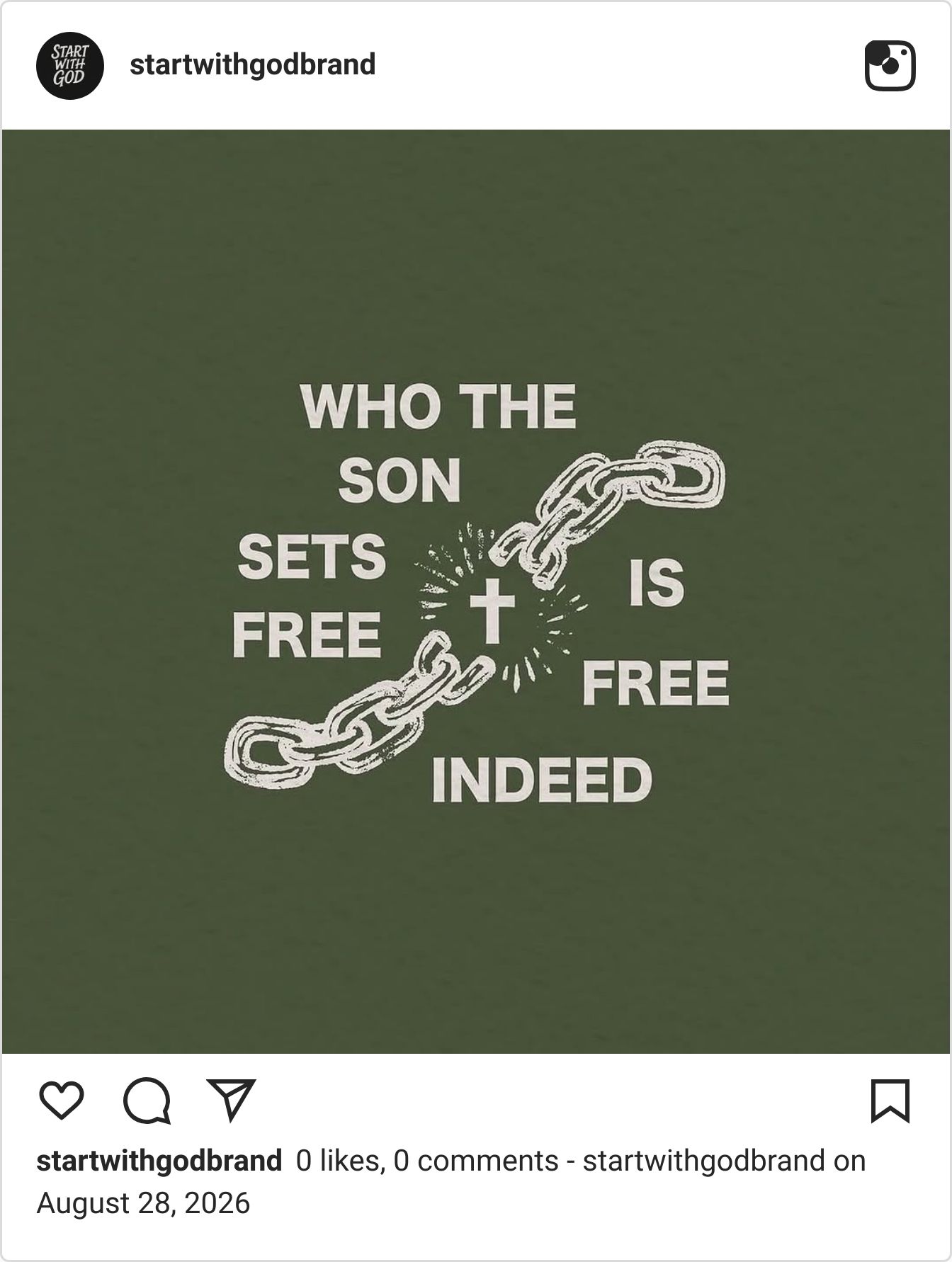
📸 Today’s Instagram Post
Go like, comment, and share!

❓Trivia Question of the Day

👋 That’s it for Today
Thanks for letting us be a part of how you start your day with God.
See you tomorrow,
Zach | Start With God