Sponsored by

Good morning. Today is Wednesday, September 16th!
🥳 Congratulations on starting today with God, and thank you for letting us be a part of it.

📖 Verse Of The Day

— Jeremiah 31:31

❤️ Today’s Sponsor
Smarter CRM. Less Busywork.

Disconnected data and tools make it harder to understand your customers. HubSpot's Agentic Customer Platform brings your data, teams, and tech stack together with AI built in to help your business work faster and create more personalized customer experiences.
Why HubSpot and what's new
Use AI powered tools to take action faster
Unify your data, teams, and tech stack in one place
Create one shared view of customer data
Connect teams around the same customer context
Bring your business tools into one place
Connect more of your business in one place and give every team a smarter way to work. Get set up quickly and start checking off your hardest tasks.

🧠 Devotional
We know the Bible is divided into two big sections: the Old Testament and the New Testament.
We know what old means. We know what new means. But what exactly does testament mean?
You probably already have a good idea what it means, but let’s define it anyway, because understanding that one word actually helps us understand the whole Bible a little better.
In the biblical context behind the names Old Testament and New Testament, testament refers to a covenant. A covenant is more than God simply making a promise. It describes a binding relationship God establishes, with promises and commitments connected to it.
And covenants are all over the Bible.
God establishes a covenant with Noah. He makes covenant promises to Abraham. Then there is the covenant God makes with Israel through Moses after bringing them out of Egypt.
But while we’re still in the Old Testament, God says something really important.
Jeremiah 31:31 says, “The days are coming… when I will make a new covenant with the people of Israel and with the people of Judah.”
Notice where we just read that.
The Old Testament.
Before we ever get to Matthew, God is already telling us a New Covenant is coming. He goes on to say He will write His law on their hearts, He will be their God, and He will “remember their sins no more.”
Then Jesus arrives.
At the Last Supper, He takes the cup and says, “This cup is the new covenant in my blood” (Luke 22:20).
Jesus is using language God had already given through Jeremiah.
And here’s a little translation nerd-out. The Greek word in Luke is diathēkē. The NIV translates it covenant, while the KJV translates the exact same word testament: “This cup is the new testament in my blood.”
That’s where these words start connecting.
Hebrews makes the connection even clearer. It quotes Jeremiah’s New Covenant prophecy and explains that Jesus is the mediator of a better covenant, established on better promises.
So the Old Testament and New Testament aren’t two disconnected stories where God suddenly changed directions halfway through.
The Old Testament is already looking forward.
A New Covenant is coming.
Then Jesus comes and says that covenant is in His blood.
That’s the lesson hiding inside the word Testament: God had a plan, God promised what He would do, and in Jesus, God kept His promise.

🙏 Prayer (Guided by A.C.T.S.)
When you’re not sure how to pray, A.C.T.S. gives you a simple path to follow: Adore, Confess, Thank, and Ask.
Adoration: Father, You are faithful and always keep Your promises.
Confession: Forgive us when we doubt Your Word or Your plan.
Thanksgiving: Thank You for the New Covenant through Jesus.
Supplication: Help us trust Your promises and see Christ throughout Scripture.
In Jesus’ name, Amen

🎶 Worship Song
“All Things New” by Big Daddy Weave

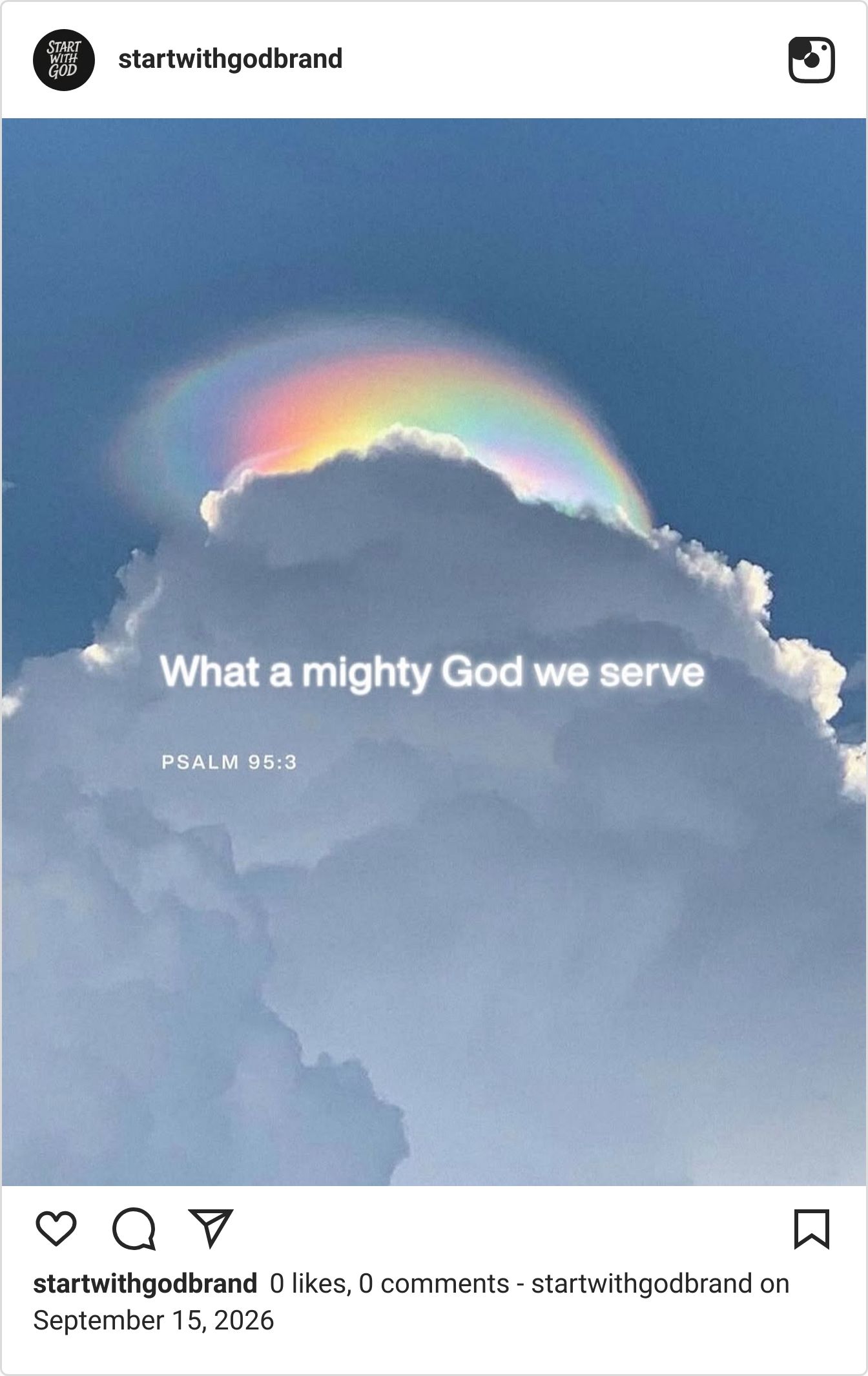
📸 Today’s Instagram Post
Go like, comment, and share!

❓Trivia Question of the Day
Which Testament has more books?

👋 That’s it for Today
Thanks for letting us be a part of how you start your day with God.
See you tomorrow,
Zach | Start With God