In partnership with

Good morning. It’s Sunday, January 8th, aka National Bubble Bath Day 🧼.
🥳 Congratulations on starting today with God, and thank you for letting us be a part of it.
We are proud to say everything you read is fact checked by an AI model trained on every translation of the Bible.

📖 Verse Of The Day


⬇️ Click the Link to Get Us Paid
Your home for politically-neutral, Christ-first news

Tired of feeling like you have to pick a side just to stay informed? The Pour Over makes it easy to engage with the news––without the bias, outrage, or anxiety.
Every Monday, Wednesday, and Friday, they deliver quick, entertaining news summaries paired with short biblical reminders to keep you rooted in Christ, not the chaos. Instead of fueling division, the news becomes a tool to strengthen your faith and spark loving action in response.
Over 1.5 million Christians are already reading and staying informed with Christ-first, anger-free, and even kinda funny news.
Join today. It’s always free and totally unsubscribable.

🧠 Devotional
This verse can sound confusing at first. “I shall not want” almost sounds like David is saying he does not want God, or that wanting anything is wrong. But that is not what the verse means.
It also helps to notice something simple. There is no verse before this one. Psalm 23:1 is the opening line of the psalm. David starts here on purpose. He begins by defining the relationship before saying anything else.
“The LORD is my shepherd.”
In plain English, David is saying this: because God is leading my life, I am not left without what I need.
In biblical language, “want” means lack. To be in want is to be without something necessary. So when David says, “I shall not want,” he is not talking about desire. He is saying that because the Lord is his shepherd, he is not lacking what is necessary.
The very next verse explains exactly what he means.
“He maketh me to lie down in green pastures: he leadeth me beside the still waters.” (Psalm 23:2, KJV)
Sheep do not find food and water on their own. They need a shepherd to lead them there. Green pastures and still waters represent provision, rest, and safety. David is saying he does not live in lack because God actively leads him to what sustains him.
Psalm 23 never claims that life is easy. Later in the psalm, David talks about dark valleys and enemies. The promise is not the absence of difficulty. The promise is the presence of the shepherd.
“I shall not want” is one of the most misunderstood lines in Psalm 23. It is not a claim that life is easy or that needs disappear. It is a statement of trust. David’s confidence was not rooted in having everything figured out, but in knowing who was leading him. When God is the shepherd, lack no longer defines the story, even when circumstances feel uncertain.
So today, notice where you feel lacking. Instead of rushing to fix it, pause and ask who is leading you right now. Then take one small step that reflects trust rather than control.
How Did today’s devotional length feel?

🙏 Prayer (Guided by A.C.T.S.)
When you’re not sure how to pray, A.C.T.S. gives you a simple path to follow: Adore, Confess, Thank, and Ask.
Adoration: God You are my shepherd, steady, present, and faithful in every season.
Confession: I admit I try leading myself and panic when I feel lacking.
Thanksgiving: Thank You for providing, restoring, and guiding me even when I doubt.
Supplication: Be my shepherd today, help me trust Your care instead of chasing control.
In Jesus name, Amen

🎶 Worship Song
“Still Waters” by Leanna Crawford

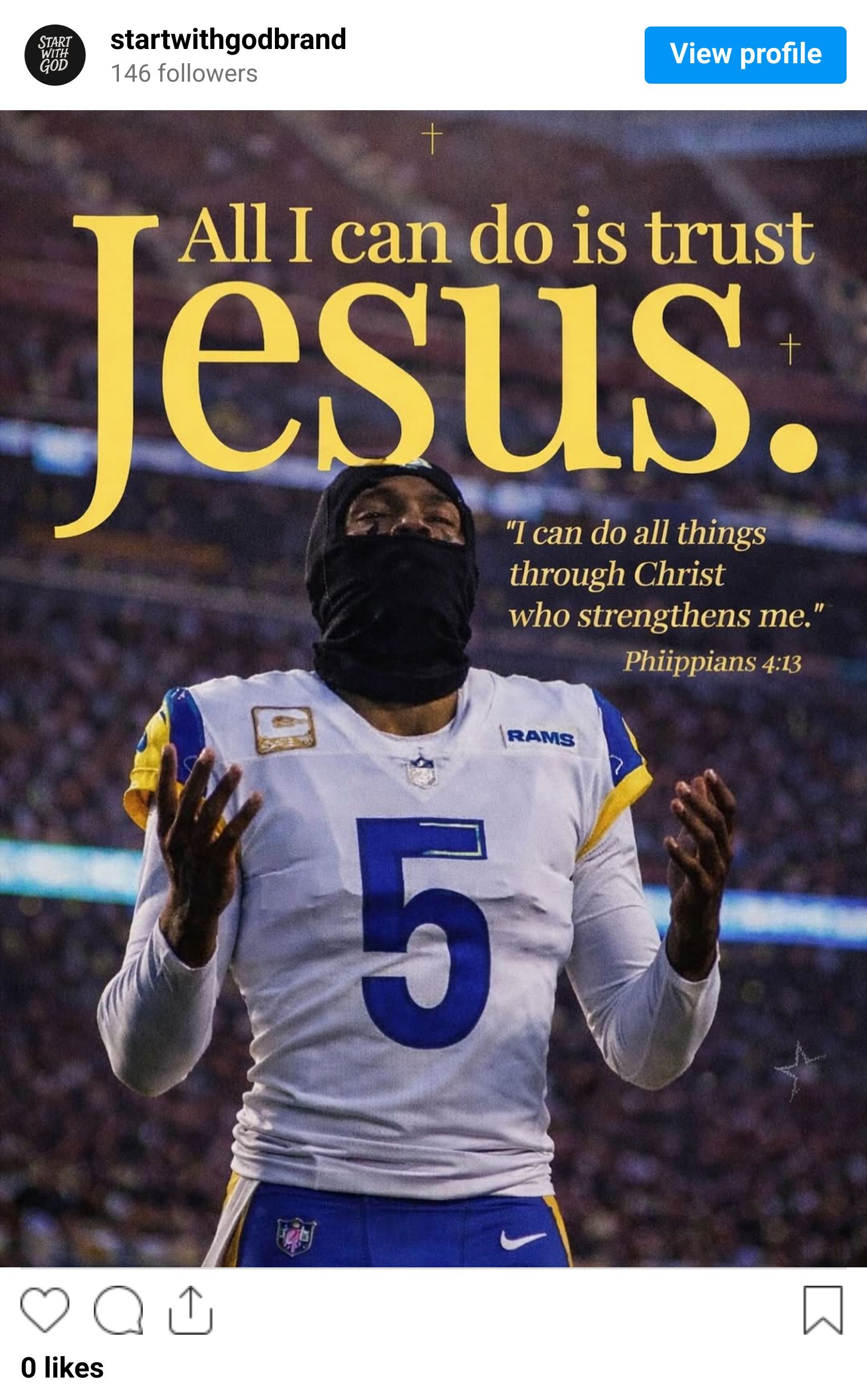
📸 Today’s Instagram Post
Go like, comment, and share!

❓Trivia Question of the Day
Which role does David use to describe God in Psalm 23?

👋 That’s it for Today

Thanks for letting us be part of how you start your day with God.
See you tomorrow,
Zach | Start With God